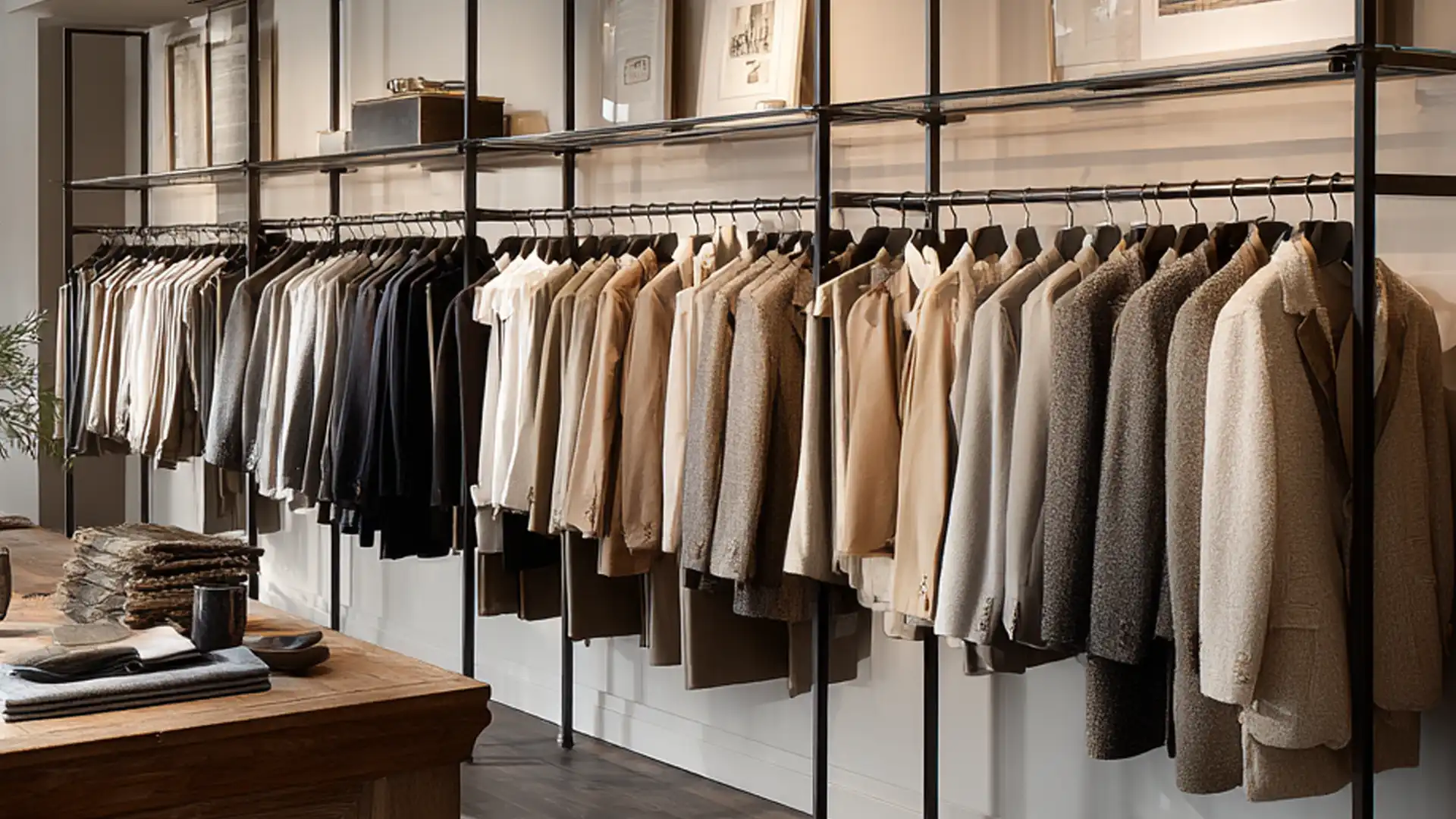
Fashion range planning decides what you will buy, in what quantity, at what price and in what proportion, before a single order is placed. It is the point in the season where sales and margin are largely determined, and it is the part of the job most often reduced to filling in a spreadsheet.

Jump to:
What Fashion Range Planning Actually Involves
The range plan is like a jigsaw with lots of different parts that gets refined and edited repeatedly until the mix of styles, colours and quantities you have planned for the season are balanced. It is rarely perfect on the first draft, and it is not meant to be. It is a process that takes time to get right.
Building a range plan pulls information from different sources. Future trend directions, last season’s sales by style and size, your open to buy budget, production capability and lead times, price point hierarchy, option counts and store grading allocations.There is a lot to consider for your category and styles.
In larger businesses the merchandising team calculates the budgets, quantities and allocation numbers. That does not mean the buyer does not have to understand those numbers and work with them. On the contrary the buyer should know what numbers they are working with. The success of the plan lies with figures and products that are aligned and balanced.
In a womenswear team you might have separate buyers for knits and wovens, or the department may be split by tops, bottoms, dresses and outerwear etc. In childrenswear, a buyer is usually responsible for a gender and age group and plans across every category within it. Whatever the structure, the range plan is the document that makes the season legible to everyone else in the business.
Podcast Thrive in Fashion Buying & Merchandising
Episode 011, Maximise Your Sales & Profitability with Strategic Range Planning.
Range planning is the module buyers tell me they wanted first and were given last. The Thrive in Fashion Buying and Merchandising course covers it in full, including the range plan templates I used in the buying office rather than a theoretical version of them.
Width and Depth: Important buying Decisions
Two ranges with identical budgets can produce very different results in a season depending on how that budget is spread.The width of a range refers to the number of different styles and shapes on offer. The depth refers not just to the quantities per style but also per option; the number of colourways, prints, sizes and price points available within each style. Reduce the number of styles but add quantity with colour options to the key ones and you have narrowed the width and increased the depth. That is a deep and narrow strategy, and it works when you have genuine confidence in a small number of tried and tested shapes.
The opposite approach means spreading the budget across more styles with fewer options in each. It reads as newness on the shop floor and gives the customer more to look at. It also means no single style is bought in enough depth to make an impact or matter commercially if it performs.
There is no right or wrong approach. What causes problems is going back and forth between the two without making a strategic decision about the best route to take. Too much variation in fabric and colour makes a range look inconsistent, and offering too many products loses customers through overwhelm and then indecision with what to choose. Plan your strategy before you open the spreadsheet and start filling your plan, not after.
The Headings Your Range Plan Needs
A range plan that only lists styles and quantities is a buying list, not a plan. These are the additional fields needed to make it a strong working document.
- Product hierarchy. The level each product sits at within its group and subgroup: core, fashion or trend. This is what tells you at a glance whether the risk profile of the range matches the business strategy.
- Colour palette. Recurring core or brand colours sit alongside the new season colours, so you can see how much of the range is genuinely new.
- Fabric. Knit or woven, and weight. This can impact the price architecture and the delivery phasing of particular products.
- Silhouette. The style and fit of each piece, can help to identify duplication within the styles eg v-neck or crew, Slim fit or Baggy .
- Price range. Your pricing structure and hierarchy within each category, shown against the option count.
Core, Fashion and Trend
Some products are classified never out of stock, or all-season. They carry lower risk and are less sensitive to markdown than high fashion pieces because their success rests on price, fit, colour and availability rather than on a silhouette staying current. Lead times are less pressured, they replenish on an ongoing basis, and they can be produced in low season when production capacity is cheaper.
Ranges with a higher proportion of trend-driven styles depend on hero items, and that is where your expertise in market research and commercial reading of new trend is key. Buying closer to the season gives you a more accurate read of those trends that are getting traction and lowers the buying risk to an extent. It does however, require suppliers who can work and deliver within shorter lead times. If you do not have that supply chain in place, buying late is not a strategy that will be successful.
Getting Size Ratios Right
The ratio you set on your size range on every product, can make the difference between a profitable range or the unsold sizes which will show up in your terminal stock requiring heavy markdowns to clear..
There is a good way to understand this. Review your competitors shop floor at sale time and look at what is left on the rails. In most cases it is the smallest and largest sizes still hanging there, because the middle sizes sold out early and left a broken range behind. Those leftovers are the ones that need heavy markdowns to clear.
A twelve-piece ratio pack for a small, medium, large and extra large size range might run two, four, four, two. ( 2:2:4:2) If you know your customer size preference skews larger, then a two, two, four, four (2:2:4:4) is the more profitable split. The point is that the ratio should come from your own sell-through data by size, not from a default carried over each season without review. This ratio may vary across categories and sometimes across individual styles within a category.
It matters most on trend-driven pieces, where the selling window is short. The impact of a broken size curve four weeks into an eight-week trading window leaves you is difficult to recover lost sales from.
Price Architecture and What Your Customer Sees
Most retail brands run several price levels within a category. Basic and core products sit at entry level, classic and key products in the mid range, and more styled or fashion led pieces sit at the highest exit price.
When customers know your brand they arrive with an expectation of what they pay. The price points you set have to make sense against that expectation and the product has to read as good value at the price you have chosen.
This is where buyers get caught. From your side there are real cost differences in fabric quality, construction and styling that justify a higher retail. From the customer’s side those differences may be invisible on the rail. If she cannot see what she is paying more for, the price point hierarchy will not work. As a buyer you have to balance the costs and margins of your products against the price point levels your customers will buy into.
Four Questions to Answer Before Sign-Off
No matter how good your products they have to fit with your business strategy and your end consumer. before your review make sure you can answer the following questions.
- Is the product right for your market position? Is it relevant in appeal and quality for the segment you operate in and the season you are buying for? If not, it is unlikely to sell whatever else is right about it.
- Do you understand your customer? Different customers want different products at different moments. Knowing when yours is ready to buy a category matters as much as knowing that she wants it.
- Does this meet or exceed her expectations? The aim is a range where your customer would happily buy several pieces, not one where she only finds a single thing she likes.
- Have you planned for the retail calendar? Party season in December, holiday and festival trading through summer, and whatever regional occasions drive footfall in your market. Your budget needs to be allocated against those peaks in advance, not found later.
Final Thoughts
Range planning is not a task you just complete and consider it done. It is a process that keeps moving and changing as the season trades, and the plan you signed off in March may look different by the time your final production is shipped to stores. Each season gives you the chance to build on the last one, recovering the opportunities you missed and leaving behind the lines that did not earn their place. That habit of reviewing honestly, each week and at the end of each season, is what separates a range that grows from one that simply repeats over and over.
Fashion Range Planning FAQs
Range planning is the process of deciding what a buying team will purchase for a season: which styles, in what quantities, at what price points and in what proportion to each other. It sits between trend research and order placement, and it is where the sales and margin outcome of a season is largely determined.
Width is the number of different styles and shapes offered. Depth is the number of colourways, prints, sizes and price points available within each of those styles. A deep and narrow range carries fewer styles with more options in each. A wide and shallow range carries more styles with fewer options in each.
At minimum: the product hierarchy showing core, fashion and trend levels within each category, the colour palette, the fabric type, the silhouette, the price architecture, the option count and the planned quantities. Budget allocation is normally broken down by category rather than by story, so the plan needs to show both views.
Start with your own sell-through data by size rather than an industry default. A twelve-piece ratio of two small, four medium, four large and two extra large suits a business whose demand sits in the middle. If your customer skews larger, a two, two, four, four split will leave you with less terminal stock at the end of the season.
There is no fixed number. It depends on category, store grading and how much depth each style needs to carry. The practical test is whether the customer can understand the range at a glance. Too many options creates indecision at the rail and spreads your budget too thinly across styles that then cannot be bought in commercial depth.